Notes on evidence, listening, and biodiversity conservation.
This essay is a reflective piece exploring how scientific evidence is heard, organized, and acted upon in biodiversity conservation. It is intended as a work in progress rather than a definitive position.
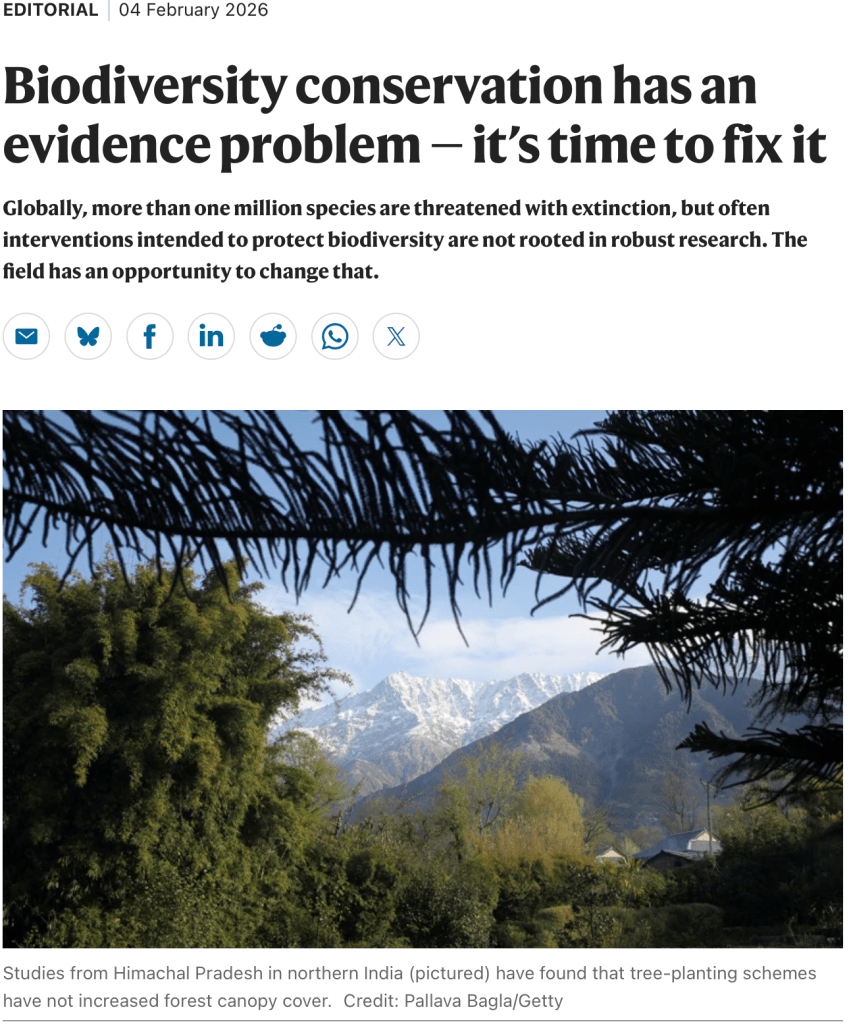
A recent Nature editorial argues that biodiversity conservation has an evidence problem.
The editorial points to Conservation Evidence, based at University of Cambridge, a huge project, hundreds of researchers have spent two decades working through than 1.2 million research papers in 18 languages to identify studies that that conservation interventions.
A recent Nature editorial argues that biodiversity conservation has an evidence problem.
I argues that there is no evidence problem, at least before arguing there is an evidence problem, I think we should consider the problem’s itself causing from lack of evidence or ignoring, listening it.
The editorial describes the ambition for a “conservation chatbot”. The idea is that a user asks a question what was curious about, and the ai returns a narrative answer with links to underlying evidence. Such as Conservation ai.
It asks for coverage audits. Does the database capture the relevant studies? Are summaries accurate? Which regions are overrepresented? Which taxa disappear? How long does it take for a new study or a retraction to enter the system.
But a chatbot can only imitate what is in the system.
If the literature is dominated by studies from high-income countries, the chatbot inherits that imbalance. If grey literature and indigenous and local knowledge are missing, the answer may look complete while being deeply partial.
In technology, a beautiful dashboard can hide a broken pipeline. In conservation, a polished evidence summary can hide an unequal archive.
The editorial says the chatbot should “own up to not knowing”. I love that. That should be the standard for ai and, frankly, for people. Conservation does not need a very confident robot making up ecological advice. We have enough problems.
This is where Apollo comes in.
In Güngör Dilmen’s theatre play The Ears of Midas, we return to the old question: is it Apollo, with his golden lyre, or Pan, with his reed flute, who plays better?
This sounds like a cute mythological talent show, but it is also a serious theory of evidence. The moment you ask which instrument plays better, you are also asking which sounds counts, which standard counts, and who gets to judge.
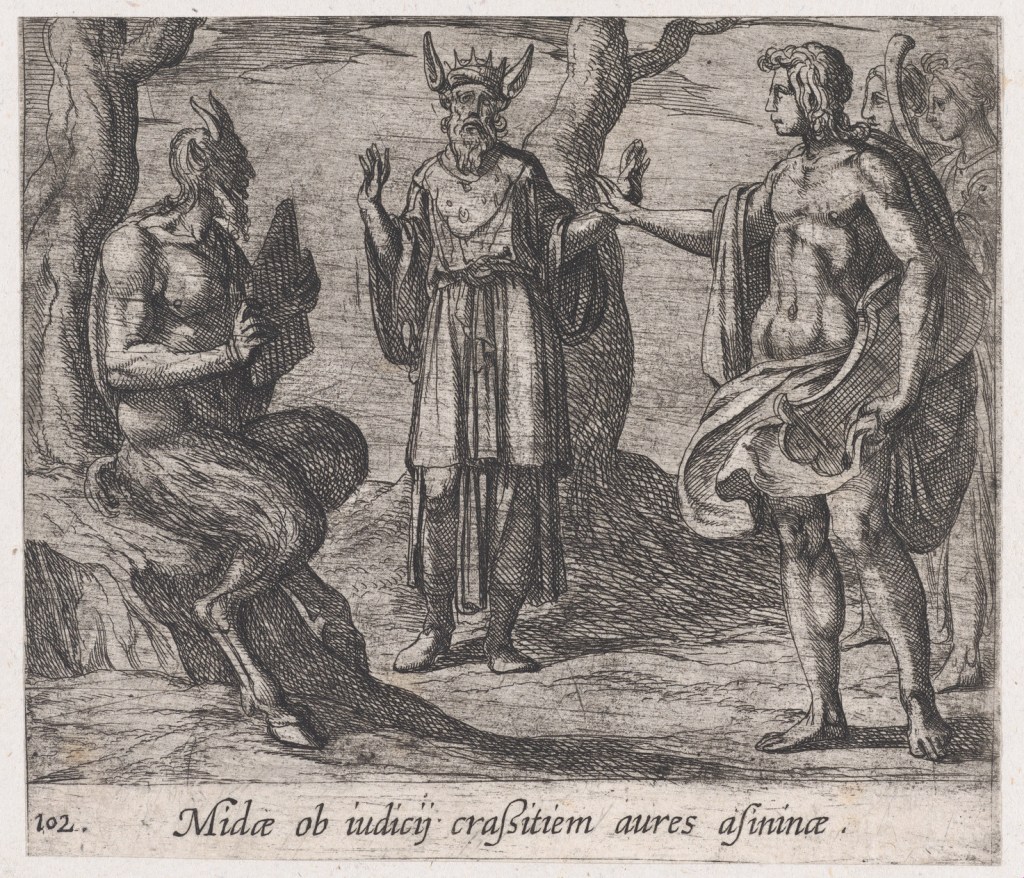
Midas with the Ears of an Ass, from Ovid’s Metamorphoses.
Pan with reed flute on one side; Apollo with lyre on the other, and the King Midas staying in the middle of two gods.
Apollo’s lyre can stand for official, polished, institutionally recognized knowledge. Pan’s flute can stand for local, pastoral, embodied knowledge the kind that comes from living with a landscape, not only studying it from a distance.
Conservation has its own version of this. Which evidence counts? Peer-reviewed papers? Long-term field notes? Indigenous knowledge? Farmer observations? Environmental DNA? Satelite data? Community science? AI-assisted synthesis?
The danger is that we pretend only one instrument is real music.
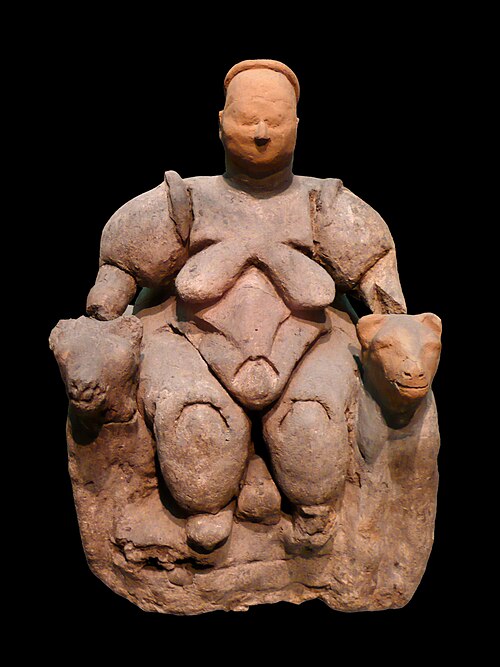
In Dilmen’s play, Scene V, Midas’ daughter asks about the instruments, and the sculptor does not simply choose Apollo or Pan. Instead, he shows the mother goddess Cybele holding both flute and lyre in balance. The scene matters because does not deny difference. A flute is not a lyre. A randomized trial is not a field note. Environmental DNA is not oral history. A satellite image is not a fisher’s memory of coastline.
But difference does not have to mean exclusion. The goal is not to flatten every kind of evidence into one sound. The goal is to build institutions capable of hearing relations among different sounds.
For more than half a century, the music has been playing, not in storied cities such as Rome, Troy, or Gordium, long fallen, but across our modern cities and landscapes, shaping the living things from policymakers to the goats that once listened to Pan.
Scientists, institutions, communities and international organizations have contributed to this chorus, documenting biodiversity loss, ecosystem change, and their drivers. So the question is not only whether evidence exists. The question is whether it is recognized, organized, financed, and allowed to shape action.
Here again, the challenge is less about producing more data in the abstract and more about mobilizing what is already known.
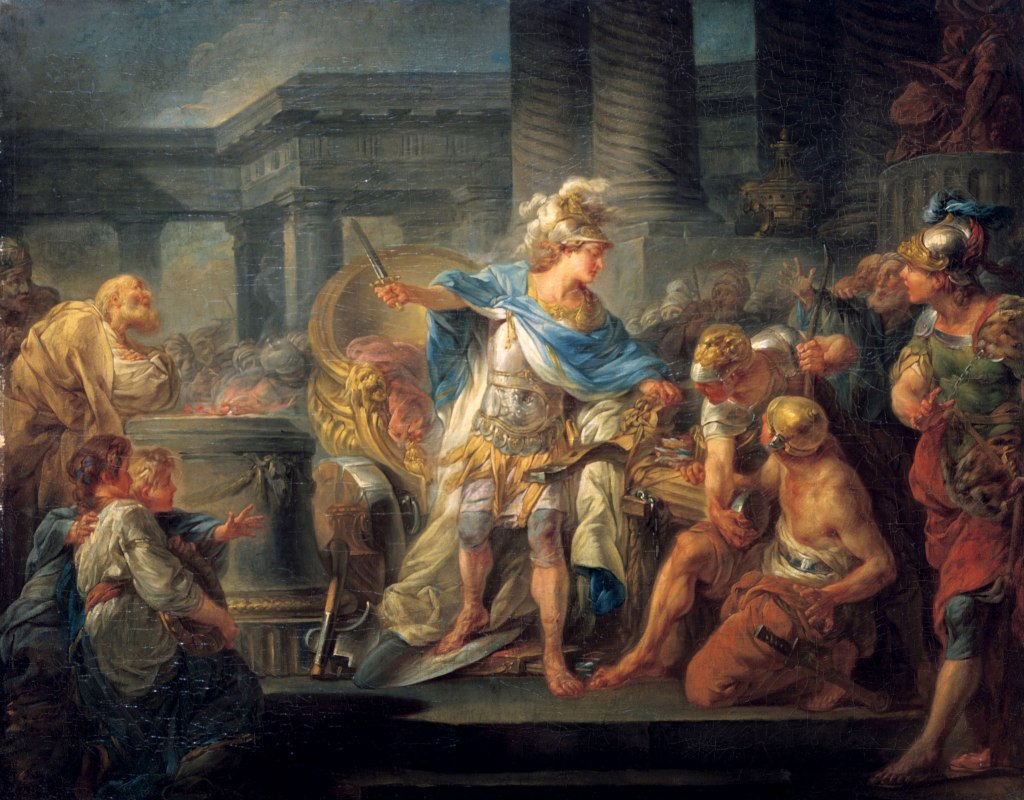
Shakespeare gives us the image of the Gordian knot:
But biodiversity conservation is probably not that kind of knot. There may not be one dramatic sword cut. The work is less cinematic: maintain monitoring programmes, support local expertise, fund synthesis, publish negative results, project institutional memory, reform incentives, and enforce laws that already exist.
Let me frame this conservation decision-making as a stack.
At the bottom, there is the data layer: field surveys, experimental studies, monitoring records, satellite images, eDNA, museum specimens, community observations, and local ecological knowledge.
Above that is the synthesis layer: systematic reviews, evidence maps, databases, meta-analyses, expert assessments, and now machine-assisted screening and summarization.
And above that is the action layer: budget, laws, enforcement, incentives, land tenure, institutional memory, and political courage.
The Nature editorial focuses mostly on the synthesis and interface layers. It says the literature is not organized in a way that lets users readily find answers.
The editorial also admits that, in some cases, the evidence is already massive and what is lacking is the will to act. If that is true, then a database or chatbot is not the whole answer. It is a tool in the middle of stacj, not a substitute for the top of the stack.
This distinction is matter because different failures require different repairs. If the problem is evidence-limited, then we need new studies. If it is accessibility-limited, then we need better synthesis and search. If it is will-limited, then we need politics, enforcement, finance, and accountability.
A good evidence system should tell us which kind of problem we are facing. Otherwise, “we need more evidence” can become a very elegant way of saying, “we would rather not act yet”.
Those are not the same thing.
The review report makes the implication explicit: if the binding constraint is political will and enforcement, then evidence databases and chatbots may address a secondary issue. That does not make them unimportant. It means they should be presented as complementary to political action, not as substitutes for it.
In this sense, the evidence problem is not simply about absence. It is about layers of disconnection, and about whether the music of evidence, once played, is allowed to shape action.
The question is not only how well instruments are played, but whether the music is allowed to be heard at all, and does not fall on deaf ears.
That brings me to Senator John H. Chafee’s opening statement in a 1986 US Senate hearing on ozone depletion, the greenhouse effect, and climate change.
“The first thing we should do is to ratify the Vienna Convention for the protection of the ozone layer… Next, it is important to focus attention on the potential effects of ozone depletion and of climate change on the choices that we as a global society must make… These are no longer just science issues. They are now policy issues… We must not allow their message to fall on deaf ears.”
— Senator John H. Chafee, Opening Statement, Ozone Depletion, the Greenhouse Effect, and Climate Change, U.S. Senate, 99th Congress, Second Session, June 10–11, 1986.
The evidence problem is a listening problem. Who can hear Apollo’s music? Maybe that is another way of asking whose evidence is heard, whose evidence is ignored, and whether the music of evidence, once played, is allowed to shape action.
I share this piece to invite discussion rather than to settle it. Comments, critiques, and alternative readings are welcome.
Thanks for “listening”.
References
Ozone Depletion, the Greenhouse Effect, and Climate Change: Hearings Before the Subcommittee on Environmental Pollution of the Committee on Environment and Public Works, United States Senate, Ninety-ninth Congress, Second Session, June 10 and 11, 1986.
Dilmen, G. The Ears of Midas. Midasın Kulakları]. Tr. by Carolyn Graham.


 onur doğan
Leave a comment